
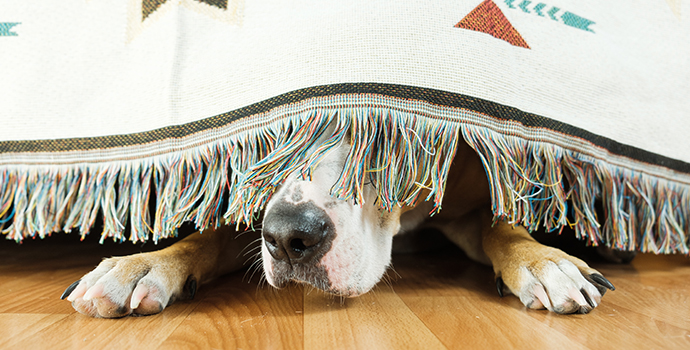
Does your dog fear fireworks? Does he try to hide, start shaking, or lay his ears back and give you a look that seems to say, “Make it stop!”? Other signs of fear include whining, barking, howling, shivering, and cowering. You may notice that some dogs are terrified, while others don’t give fireworks or thunderstorms a second thought. Scientists think this has to do with the formative months in a puppy’s life. After twelve weeks of age, dogs begin to develop their fear response. If they encounter something that frightens them, such as a loud noise of any type, they can learn to be afraid and want to self-protect. Another factor in fear response is the dog’s temperament, which can be affected by genetics and early development. Even the pup’s mom experiencing a high amount of stress while carrying the puppy can produce high cortisol levels, which in turn affect the dog’s internal stress response. While the best tactic is to prevent noise trauma for a dog, that’s not always possible. Here are some other things you can do to get through those “loud” times of year.
- Play a CD or white noise to drown out the noise. Soothing sounds are great for calming dogs down in a variety of situations. In fact, research shows the way specific types of music, like classical, reggae, and soft rock, can help calm fearful dogs.
- Create a safe space. If your dog is crate trained, make their crate available. Bring bedding and toys into a room where your dog will feel comfortable.
- Try counterconditioning—training the dog not to be afraid. Desensitize your dog by playing fireworks on a low level while playing with your dog and giving treats. It’s possible your dog will associate fireworks sounds with treats and fun.
- Try a pressure vest. The theory is that pressure applied to the dog’s torso causes a calming effect similar to swaddling a baby or getting a constant hug. Avoid using a vest for elderly dogs and dogs with heart problems, or during extreme heat.
- Use a safe botanical to help maintain calmness. You’ve probably heard of echinacea for immune support, but researchers have found that one specific species of echinacea—Echinacea angustifolia—has a compound that influences brain chemistry and eases nervousness.Taken as a supplement, this breakthrough echinacea extract can relax and calm your pet in as little as 30 minutes. Give your dog this species of echinacea to help him manage the stress of fireworks or anything that causes him to feel upset.
Try one or all of these tips to help your pet have a happy 4th of July!
Does your dog fear fireworks? Does he try to hide, start shaking, or lay his ears back and give you a look that seems to say, “Make it stop!”? Other signs of fear include whining, barking, howling, shivering, and cowering. You may notice that some dogs are terrified, while others don’t give fireworks or thunderstorms a second thought. Scientists think this has to do with the formative months in a puppy’s life. After twelve weeks of age, dogs begin to develop their fear response. If they encounter something that frightens them, such as a loud noise of any type, they can learn to be afraid and want to self-protect. Another factor in fear response is the dog’s temperament, which can be affected by genetics and early development. Even the pup’s mom experiencing a high amount of stress while carrying the puppy can produce high cortisol levels, which in turn affect the dog’s internal stress response. While the best tactic is to prevent noise trauma for a dog, that’s not always possible. Here are some other things you can do to get through those “loud” times of year.
- Play a CD or white noise to drown out the noise. Soothing sounds are great for calming dogs down in a variety of situations. In fact, research shows the way specific types of music, like classical, reggae, and soft rock, can help calm fearful dogs.
- Create a safe space. If your dog is crate trained, make their crate available. Bring bedding and toys into a room where your dog will feel comfortable.
- Try counterconditioning—training the dog not to be afraid. Desensitize your dog by playing fireworks on a low level while playing with your dog and giving treats. It’s possible your dog will associate fireworks sounds with treats and fun.
- Try a pressure vest. The theory is that pressure applied to the dog’s torso causes a calming effect similar to swaddling a baby or getting a constant hug. Avoid using a vest for elderly dogs and dogs with heart problems, or during extreme heat.
- Use a safe botanical to help maintain calmness. You’ve probably heard of echinacea for immune support, but researchers have found that one specific species of echinacea—Echinacea angustifolia—has a compound that influences brain chemistry and eases nervousness. Taken as a supplement, this breakthrough echinacea extract can relax and calm your pet in as little as 30 minutes. Give your dog this species of echinacea to help him manage the stress of fireworks or anything that causes him to feel upset.
Try one or all of these tips to help your pet have a happy 4th of July!