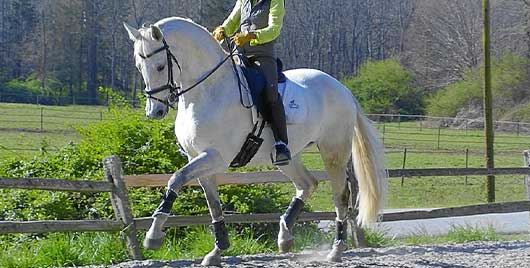
Exercise invigorates the body and the mind, helping ourselves and our horses feel refreshed and revitalized. However, a hard work out can leave our horses sore for a day or two. How quickly a horse will recover from a hard ride is influenced by several factors, including nutritional support. When your horse is experiencing routine muscular soreness from exercise, there are steps the horse owner can take to support muscular recovery and minimize occasional muscular soreness.
When present, systemic inflammation will prolong your horse’s recovery period after a workout. Systemic inflammation simply put is inflammation throughout the whole body. Inflammation is normal when it is limited but persistent inflammation is destructive. Persistent inflammation is caused by the strain put on our bodies by an imperfect diet, exposure to pollutants, injury and/or infection, and the many miniature stress events we and our horses experience day to day. By improving our horse’s daily nutrition, we can reduce inflammation in his body and help our horse do his under saddle job with more ease.
Let’s begin with the importance of feeding a clean diet. A clean diet feeds the body, promoting health and longevity without causing negative side effects to health, such as such as persistent inflammation. The two most important questions I ask myself about what I am feeding my horses are: how is it made and what is it made of? First, I feed my horses non-GMO and organic whenever possible. Yes it’s a commitment to make, but there is a big difference in my most sensitive horses when their pesticide consumption is minimal to zero. Studies have shown glyphosate reduces the population of beneficial bacteria in the gut while causing the tight junctions in the intestinal lining to open, a condition known as leaky gut. No matter what you’re feeding, if the gut isn’t working properly then your horse isn’t getting the nutrition you’re spending your hard-earned money for. Second, I read the label of what I am feeding. Be aware of non-food stuffs posing as food. My horses are on a whole-food based diet because the more the food is processed, the more vitamins and minerals are lost before it reaches my horse’s mouth. Commercially processed feeds compensate for this by fortifying their formulas. So that leads us to the need to be aware of the source of the ingredients. Is this a clean source? Is this a source my horse’s body can absorb and assimilate? When I’m not sure, I do a little research. If it is not clearly advertised as clean and bioavailable, then it probably isn’t. Conscientious food and supplement companies who produce quality products the right way are proud of that fact and want to brag about it. When companies do not give consumers specific facts proving the quality of their product but rather simply state that it is quality, that is a red flag. We have to be advocates for our animals because the fact is companion animal and livestock food industries do not have the same standards as food intended for human consumption. Some companies rise above the minimum standard to provide our equine partners with superior nutrition and those are the companies I want feeding my horses.
Even on a clean diet, I’ve had a few horses over the years who have had tight topline tendencies. More than just your routine muscular soreness, when a horse is tight in the topline, they feel like they’re holding their whole body, are difficult to warm up, and it is frustrating because you feel like they’re working against you. When a horse is tight in his neck, he is inconsistent in the contact. When a horse is tight in his glutes, he is difficult to get in front of the leg, and can even be short strided with one or both hind legs until warmed up. When a horse is tight in the back, he is difficult to adjust. When he is in his comfort zone, he is easy to ride but as soon as you ask for a change in balance, rhythm, or bend, he becomes evasive.
The first thing I do for my horses who are experiencing muscular tightness and/or soreness is double my normal dose of magnesium and vitamin E. There are several different types of magnesium out there. My experience has been that the form of magnesium that works the best differs horse to horse, and sometimes they benefit from a combination of magnesiums. I try magnesium malate, magnesium oxide, and magnesium citrate. I start with one and if I don’t see results I switch to or add another, until I find the one that produces results for that horse. Regarding vitamin E, natural provides far superior support to the body than synthetic does. So you’re looking for d-alpha not dl, and even better if you can find one with mixed tocopherols (alpha is only one vitamin E tocopherol).
Magnesium and vitamin E directly support your horse’s muscle tissue. The next two, curcumin and boswellia help maintain a normal inflammatory response. Together boswellia and curcumin enhance the body’s normal repair of connective tissue and joints and help reduce inflammation associated with training and competition. For the most bioavailable boswellia, look for at least a 10% AKBA level (a powerful component of the herb). Curcumin enhanced with turmeric essential oil will outperform other curcumin products. I recommend a dose ranging from 2000 to 6000 mg of curcumin plus boswellia combined twice a day. Honestly, I start with the higher dose and then lower it if I can without diminishing the results. Starting with a higher dose, I consistently feel results under saddle 36 hours after the first dose.
When your horse is experiencing occasional muscular soreness or tightness, I encourage you to consider some dietary changes and daily supplementation. Experience for yourself what a difference it can make in your horse’s ease of performance! After all, our generous horses deserve the extra nutritional support.
Works Cited:
Lemerond , T. (2021, May 28). Boswellia: An amazing gift for your health. Terry Talks Nutrition.
Lemerond , T. (2020, March 13). Curcumin: The all-in-one-solution, part 1. Terry Talks Nutrition.
Montague, T. (2021, June 4). Herbicides and hay. Stance Equine USA.