Low Mood and Lack of Energy Can Happen to Anyone
There are seasons in life when you just can’t seem to get out of a slump. Your mood is low, your thinking slows down, and your physical energy drops, making it harder to stay active or keep up with your usual routine.
Sometimes these low periods can be related to the time of year or personal situations, but the cause isn’t always obvious. And, unfortunately, these feelings can be difficult to escape. However, there may be a simple underlying cause that can be treated—low serotonin levels.
Serotonin: The Happiness Hormone
Serotonin is a neurotransmitter known for its significant impact on mood and energy levels. Its production requires the essential amino acid tryptophan. About 90 to 95 percent of serotonin is produced in cells that line the intestines. The brain and the intestines are linked by a network of nerves called the “gut-brain axis,” and serotonin synthesis is a major part of this connection.
Boost Serotonin with the Right Nutrients
Pharmaceuticals called selective serotonin reuptake inhibitors (SSRIs) exist because scientists realized long ago how critical this neurotransmitter is for human happiness. These medications prevent serotonin from being channeled for other uses, so they can be concentrated in the brain instead.
Unfortunately, SSRIs come with side effects, including agitation, irritability (one of the very things from which you’re trying to escape), headaches, sexual dysfunction, dizziness, weight gain, and nausea.
If you’re currently taking an SSRI, I’m not telling you to stop without talking to your doctor. And if you are in a mental health crisis, seek professional care. But if you’re not, and you feel trapped in a rut of low mental and physical energy, consider serotonin-strengthening nutrients as a first step.
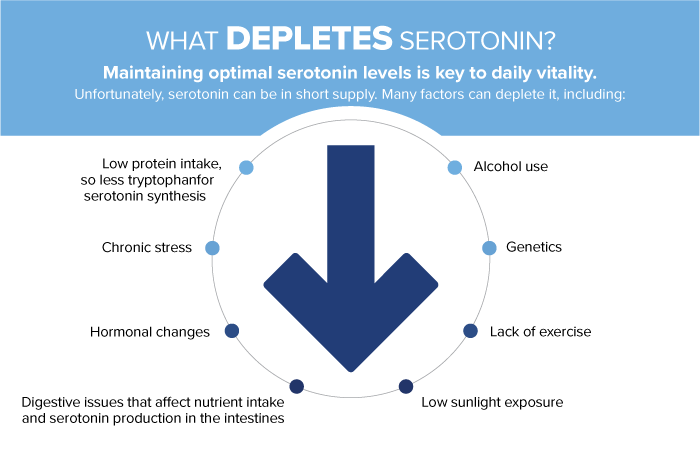
The nutrients I recommend help your body synthesize, preserve, and maintain optimal serotonin levels.
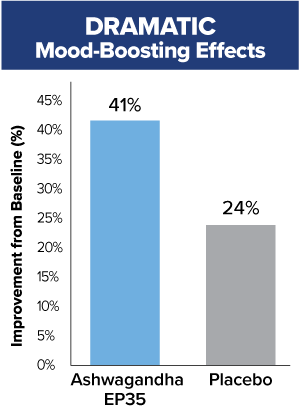 Ashwagandha: Ashwagandha (Withania somnifera) is an adaptogenic herb well-recognized in traditional practice and leading-edge research for its ability to help people remain energetic, focused, and better able to cope with stress.
One clinical study reported ashwagandha significantly reduced stress and anxiety in men and women according to the Hamilton Anxiety Rating Scale (HAM-A). It also showed improvements in the Depression, Anxiety, and Stress Scale of 30 percent versus only 10 percent in the placebo group.
This research indicates that ashwagandha works in multiple ways:
- By directly influencing serotonin and gamma-aminobutyric acid (GABA) activity, improving responses to stress
- By reducing oxidative damage and inflammation that damages brain cells and reduces brain function
- By working through the hypothalamic-pituitary-adrenal (HPA) axis to rebalance hormones and precursors associated with chronic stress and post-traumatic stress disorder
The ashwagandha extract highlighted in this study is the one I recommend. It uses a dairy-free process to standardize the herb’s key compounds, withanolides, to 35 percent, which is seven times the level of ordinary extracts.
French grape seed extract oligomeric proanthocyanidins (OPCs): Scientific research shows grape seed extract helps regulate levels of dopamine, epinephrine, and serotonin. Grape seed extract fights free radical damage that interferes with the production of healthy brain chemicals and the body’s own antioxidants. In addition to protecting neural cells from oxidative stress, other research reported grape seed extract inhibited enzymes that would otherwise reduce beneficial mood-balancing GABA, brain-protecting acetylcholine, and emotion-stabilizing serotonin. The researchers concluded that grape seed extract has great promise for modulating mood and improving cognition.
The French grape seed extract I recommend is standardized for low-molecular weight (small) oligomeric proanthocyanidins (OPCs). These valuable polyphenols are easily absorbed and protect against oxidative stress, improve healthy GABA levels, and preserve serotonin and other neurotransmitters.
Bioactive B6 and B12: The B vitamins, especially vitamin B6 and B12, are often recommended to boost energy and improve mood. Vitamin B6 acts as a co-enzyme, helping synthesize serotonin, dopamine, adrenaline, noradrenaline, and GABA. The form the body uses for serotonin production is pyridoxal-5-phosphate, which is why I recommend that exact same form as a supplement. Unlike the more common pyridoxine, it requires no conversion before the body can use it.
Vitamin B12 is also essential for serotonin and dopamine synthesis and nourishes the protective myelin sheath of nerve cells, so it’s critical for mental outlook and cognition.
Additionally, vitamins B6 and B12 keep the gut-brain axis strong. They modify the microbiome (the environment in the intestines), prompting it to synthesize a wide range of neurotransmitters, including serotonin.
Like B6, vitamin B12 is best when in a bioactive form. I recommend the methylcobalamin form of vitamin B12, which is the metabolically active form. Unlike synthetic cyanocobalamin, this form doesn’t require conversion by the liver, which can be difficult for a significant number of people.
Riboflavin (Vitamin B2): Riboflavin, also known as vitamin B2, is a crucial nutrient in helping mitochondria, the engines of our cells, boost energy and respond to stress. Healthy riboflavin levels have been linked in scientific and clinical research to improved mood.
Although found in meats, dairy, and eggs, dietary restrictions or low protein intake make it easy to come up short on riboflavin in the diet. Population studies in the United States and Great Britain found that up to 41 percent of the population is at risk of riboflavin deficiency. Fortunately, supplementation can help.
Like vitamins B6 and B12, riboflavin is a crucial nutrient for dopamine and noradrenaline in the central nervous system, so it helps keep neurotransmitters in balance.
Additionally, riboflavin helps convert standard forms of vitamin B6 into the active pyridoxal-5-phosphate form. So, although I recommend taking active forms of B6 to begin with, riboflavin can assist common forms of the nutrient, like those found in the diet, to work more efficiently at helping synthesize serotonin.
Vitamin D3: Linked to better mental outlook and physical energy, vitamin D3 activates an enzyme (tryptophan hydroxylase 2) which helps the body create brain serotonin from the amino acid tryptophan.
But many individuals—up to 70 percent of the population—get too little vitamin D, so serotonin levels may be low in a lot of people. This increases the risk of depression, seasonal mood disorders, impulsive antisocial behavior, decreased attention spans, and sluggishness.
Vitamin D levels from food are typically low—maybe 40 to 400 IU per meal. That’s not enough to make up for chronically low intake of the nutrient. I recommend 5000 IU of vitamin D3 daily.
Boost Your Serotonin and Your Resilience
It can seem tough to dig out of a cycle of low mood and energy, but I’m convinced it’s possible with the right diet and supplemental nutrients.
If you’re taking an antidepressant, because the ingredients I’ve discussed are so powerful at lifting serotonin levels, please speak with your prescribing healthcare provider before adding this combination to your regimen.
That said, clinically studied ashwagandha, combined with French grape seed extract, vitamins B2 (riboflavin), B6 (as pyridoxal-5-phosphate), and B12 (as bioavailable L-methylcobalamin), and vitamin D3, can help stop the spiral of stress and anxiety while building resilience to a wide variety of challenges.