It’s a bad idea to feed your dog from the table in general, but the practice becomes worse when you realize many foods that are fine for humans are not safe for dogs. This is not an all-inclusive list; it’s just the beginning. Some of these same foods are harmful to horses, too. Make sure not to feed the following foods to the horses in your life! For example, the following foods can mean danger for your pets:
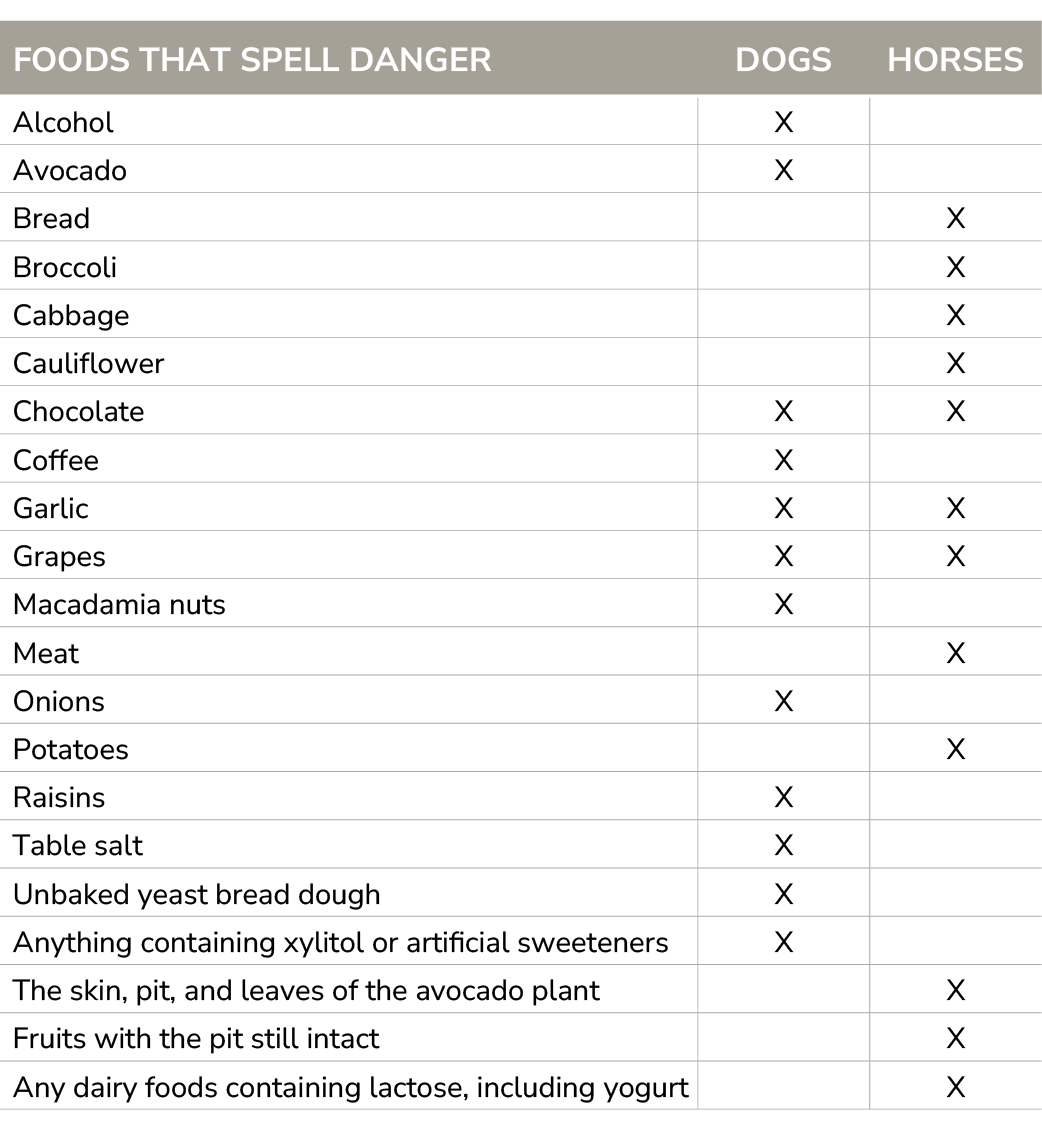
Once again, that’s not the complete list. Do your homework to make sure you are feeding your dogs and horses with foods safe for their unique systems.
Around the House
Dogs are curious and love to chew. That means you need to make sure they don’t have access to the things around your house that are useful to you, but deadly to them. Imagine a pet gets into a purse. They could have access to medications, over-the-counter pain relievers, or gum with xylitol. How about times your dog may be sniffing around the garage unattended? Cleaning supplies, pesticides, and even glues for crafting are not safe for dogs. Antifreeze has a sweet taste and is especially appealing. Windshield cleaner fluid, brake fluid, fertilizers—they are all unsafe for your dogs to get into. Don’t forget house plants. Dogs aren’t beyond digging in the dirt and chomping on plants; many are poisonous. Be aware!
While horses don’t hang around your house, you do need to be mindful about what they could get into in their environments. This includes avoiding any persimmon trees in the pasture, lawn clippings containing toxic pesticides, or any stems and leaves of nightshade produce you are growing in a garden. Those seem like random thoughts, but once again, it pays to do the research and know what is safe and unsafe for your animal. Never assume. Take the time to understand what is dangerous.
Make sure you have your vet and local or state animal poison control number always available for emergencies. You can also rely on the National Animal Poison Control line at (888) 426-4435. We love our animals, so it’s our job to keep them away from danger. National Pet Poison Prevention Month is an excellent opportunity to take poison control to heart and be prepared all year through.