3
Curcuminoids in turmeric — curcumin, bisdemethoxycurcumin, and demethoxycurcumin
2-5%
How little of turmeric root is actually curcuminoids — the compounds doing the work
8 hours
How long BCM-95® keeps measurable curcumin levels in the bloodstream
Summary
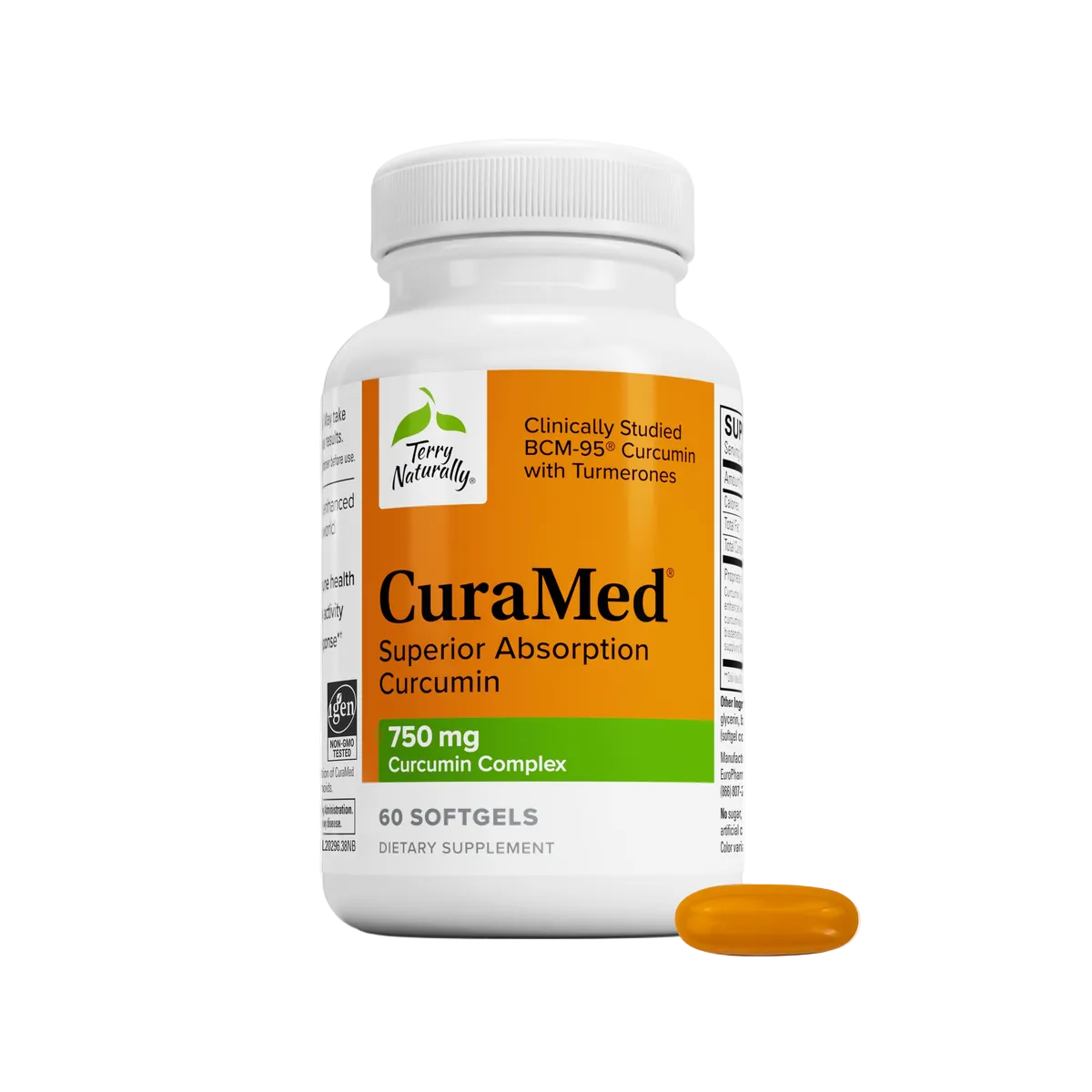
Turmeric, curcumin, and curcuminoids — these terms get used interchangeably, but they mean very different things. This guide unpacks the difference: turmeric the root, curcuminoids the three active compounds inside, and curcumin the most-studied of them. You'll learn why standard turmeric supplements often underdeliver, how BCM-95® solves the absorption problem with turmeric essential oil instead of piperine, and why CuraMed® delivers a full curcuminoid spectrum in every dose.*
Turmeric is one of the most researched botanical ingredients in the world—but turmeric as a spice contains only about 2–5% of the compounds responsible for its health benefits. Those compounds are called curcuminoids, and understanding the difference between turmeric, curcumin, and curcuminoids is the single most important thing you can do before buying a turmeric supplement. Some products on the market undersell, misrepresent, or under-deliver on curcuminoids—and without a full spectrum of them at meaningful doses, the research-based benefits of turmeric simply don't translate to your body.
Turmeric, Curcumin, and Curcuminoids: understanding the difference
These three terms are often used interchangeably in supplement marketing, but they describe different things.
Turmeric is the whole root (Curcuma longa), the golden spice used in cooking and traditional medicine. It contains hundreds of compounds—essential oils, polysaccharides, minerals, and more—but its active component is the curcuminoids, which represent only a small percentage of the whole root.
Curcuminoids are a group of three bioactive polyphenol compounds concentrated in turmeric: curcumin, bisdemethoxycurcumin, and demethoxycurcumin. Each contributes distinct biological activity. Together, they are the heavy lifters behind turmeric's well-documented ability to support healthy inflammation response, provide antioxidant protection, support brain health, and maintain joint and muscle comfort.*†^
Curcumin is the most abundant and most studied of the three curcuminoids—which is why it often serves as the benchmark for product standardization. But a full-spectrum curcuminoid complex provides the synergistic action of all three compounds, which research indicates is more beneficial than isolated curcumin alone.
†Occasional inflammation due to exercise or overuse. ^Protection from oxidative stress and damage.
How BCM-95® delivers real curcuminoid benefits*
01Curcuminoids are the active compounds
Turmeric root is mostly fiber, starch, and oils — only 2-5% of it is curcuminoids. The three curcuminoids (curcumin, bisdemethoxycurcumin, demethoxycurcumin) are the compounds behind turmeric's well-documented health support.*†^
02Standard curcumin doesn't absorb well
Even concentrated curcumin is fat-soluble and poorly absorbed — most of a standard dose never reaches the bloodstream. That's why generic turmeric capsules often need very large doses just to compensate.
03BCM-95® restores turmeric's own oil*
BCM-95® blends curcuminoids with turmeric essential oil (containing ar-turmerone) — turmeric's own natural absorption helper. Result: significantly enhanced absorption, no piperine, and measurable levels in the blood for up to 8 hours.*